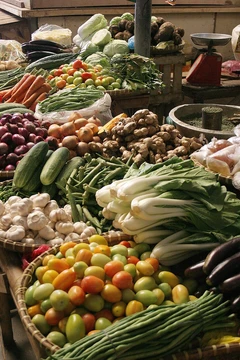
Endive
A bitter-leafed vegetable from the genus Cichorium.
Endive is a leafy vegetable from the genus *Cichorium*, a group that includes several other bitter greens. The main species are *Cichorium endivia* (commonly called endive), *Cichorium pumilum* (wild endive), and *Cichorium intybus* (chicory). Chicory itself includes types like radicchio, puntarelle, and Belgian endive. People often mix up *Cichorium endivia* and *Cichorium intybus*.
*Cichorium endivia* comes in two main cultivated forms. Curly endive, or frisée (var. *crispum*), has narrow, green, curly outer leaves. In the United States, it’s sometimes called chicory, and in French it’s *chicorée frisée*. To add to the confusion, “frisée” also refers to greens lightly wilted with oil. The other type is escarole, or broad-leaved endive (var. *latifolia*), which has broad, pale green leaves and is less bitter. It goes by names like broad-leaved Batavian endive, grumolo, scarola, and scarole. People eat escarole like other greens—sautéed, chopped into soups and stews, or in salads. In parts of Southern Italy, it’s commonly smothered, and at Christmas in Naples it’s stuffed with raisins, pine nuts, olives, capers, cheese, and breadcrumbs.
*Cichorium intybus* endive, also called leaf chicory, is popular in Europe.
Endive is packed with vitamins and minerals, especially folate and vitamins A and K, and is high in fiber. It also contains kaempferol.
- genus
- Cichorium
- species
- Cichorium endivia, Cichorium pumilum, Cichorium intybus
- type
- Leaf vegetable
- varieties
- Curly endive (frisée), escarole (broad-leaved endive)
- key_nutrient
- Folate, vitamins A and K, fiber, kaempferol
Lore & Background
Endive belongs to the genus Cichorium, which includes several similar bitter-leafed vegetables. Species include Cichorium endivia (also called endive), Cichorium pumilum (also called wild endive), and Cichorium intybus (also called chicory). Chicory includes types such as radicchio, puntarelle, and Belgian endive. There is considerable confusion between Cichorium endivia and Cichorium intybus.
Cichorium endivia has two main cultivated varieties: curly endive, or frisée (var. crispum), which has narrow, green, curly outer leaves and is sometimes called chicory in the United States; and escarole, or broad-leaved endive (var. latifolia), which has broad, pale green leaves and is less bitter. Escarole is eaten like other greens, sautéed, chopped into soups and stews, or as part of a green salad. In parts of Southern Italy, escarole is commonly cooked through smothering, and at Christmas in Naples is eaten stuffed with raisins, pine nuts, olives, capers, cheese and breadcrumbs.
Cichorium intybus endive is popular in Europe and is also known as leaf chicory. Endive is rich in many vitamins and minerals, especially in folate and vitamins A and K, and is high in fiber. It also contains kaempferol.
Reader's Guide
Endive is significant as a leaf vegetable within the genus Cichorium, encompassing species that are widely cultivated and consumed, particularly in Europe and the United States. The confusion between Cichorium endivia and Cichorium intybus reflects the overlapping common names and culinary uses of these plants. Curly endive (frisée) and escarole are the primary cultivated forms of Cichorium endivia, each with distinct leaf shapes and bitterness levels. Escarole's milder flavor makes it versatile in cooking, from salads to stuffed dishes, as seen in Neapolitan Christmas traditions. Cichorium intybus, known as chicory, includes popular varieties like radicchio and Belgian endive, further broadening the genus's culinary impact. Nutritionally, endive provides folate, vitamins A and K, fiber, and the flavonoid kaempferol, contributing to its value in diets. The ongoing confusion between species underscores the need for clear botanical and common naming, but does not diminish the vegetable's role in diverse cuisines.
Did You Know?
- Endive is a leaf vegetable belonging to the genus Cichorium, which includes several similar bitter-leafed vegetables.
- There are two main varieties of cultivated Cichorium endivia: curly endive (frisée) and escarole (broad-leaved endive).
- In parts of Southern Italy, escarole is commonly cooked through smothering, and at Christmas in Naples is eaten stuffed with raisins, pine nuts, olives, capers, cheese and breadcrumbs.
- Endive is rich in folate, vitamins A and K, fiber, and contains kaempferol.
More in Fruits & Vegetables 1-24
Spotted an error? Know more?
This is a living reference — every entry is fact-audited, and reader corrections feed straight into our audit queue. Suggest an edit · See this site's audit record