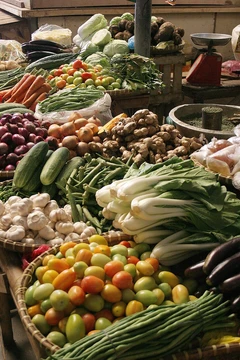
Fenugreek
Annual plant used as herb, spice, and vegetable since antiquity.
Fenugreek (Trigonella foenum-graecum) is an annual plant in the family Fabaceae, distinguished by its three small obovate to oblong leaflets. Most likely originating in the Near East, it is cultivated worldwide as a semiarid crop and has been used as a culinary ingredient since ancient times, particularly in dishes from the Indian subcontinent. Although a common dietary supplement, no significant clinical evidence suggests that fenugreek has therapeutic properties, and its use can increase the risk of serious adverse effects, including allergic reactions.
- field
- Botany, Agriculture, Culinary Arts
- known_for
- Culinary herb and spice; traditional medicine use; source of maple syrup aroma (sotolon)
- native_region
- Near East
- major_producer
- India (over 80% from Rajasthan)
- family
- Fabaceae
Lore & Background
Fenugreek is believed to have been brought into cultivation in the Near East, though the wild strain that gave rise to the domesticated form is uncertain. Charred seeds have been recovered from Tell Halal, Iraq (carbon dated to 4000 BC), Bronze Age levels of Lachish, and desiccated seeds from the tomb of Tutankhamun. Cato the Elder listed fenugreek with clover and vetch as crops grown to feed cattle. In the first century AD, Romans flavored wine with fenugreek, and in Galilee it was grown as a staple food, as mentioned by Josephus in his book, the Wars of the Jews. The plant is also mentioned in the second-century compendium of Jewish Oral Law (Mishnah) under its Hebrew name tiltan.
Reader's Guide
Fenugreek holds significance as one of the oldest cultivated plants, with archaeological evidence dating to 4000 BC. Its leaves and seeds are integral to cuisines across the Indian subcontinent, the Middle East, North Africa, and the Caucasus, used in dishes such as aloo methi, ghormeh sabzi, basturma, and hilbeh cake. Despite its long history in traditional medicine for conditions like diabetes and insufficient lactation, high-quality clinical evidence does not support these uses, and the plant carries risks including allergic reactions, hypoglycemia, and interactions with anticoagulants. The 2011 E. coli outbreak in Germany and France was linked to fenugreek sprouts from a single batch of seeds imported from Egypt. Fenugreek's distinctive maple syrup aroma, due to the chemical sotolon, also makes it a flavoring agent in imitation maple syrup. India, particularly Rajasthan, dominates global production.
Did You Know?
- Charred fenugreek seeds have been recovered from Tell Halal, Iraq, carbon dated to 4000 BC.
- The English name derives from Latin faenugraecum, meaning 'Greek hay'.
- Fenugreek seeds can impart a maple-like smell to sweat, urine, or breast milk.
- A 2011 outbreak of E. coli O104:H4 in Germany and France was linked to fenugreek sprouts from a single batch of seeds imported from Egypt.
More in Fruits & Vegetables 1-24
Spotted an error? Know more?
This is a living reference — every entry is fact-audited, and reader corrections feed straight into our audit queue. Suggest an edit · See this site's audit record